
Prevention is Key for Avoiding Costly Trocar Site Complications
Trocar site complications create real costs for hospitals through readmissions, reoperations, and extended patient recovery. Surgeons who overlook closure technique often see these costs appear months after the original procedure. Prevention during the original surgery remains far cheaper than treating complications months later on.
You want a closure strategy that protects patients without slowing down your surgical schedule. Trocar site complications range from wound infection to incisional hernia, each carrying its own cost. Below, you will find practical strategies for reducing these complications across your surgical program.
Understanding the True Cost of Trocar Site Complications
Trocar site complications include wound infection, dehiscence, ascitic fluid leak, and incisional hernia formation. In addition, each complication adds direct costs through extra appointments, imaging, or corrective surgery, plus indirect costs from readmissions and extended nursing care.
However, surgical teams sometimes treat closure as a routine final step rather than a critical decision point, and that mindset consequently leads to inconsistent technique across surgeons and cases.
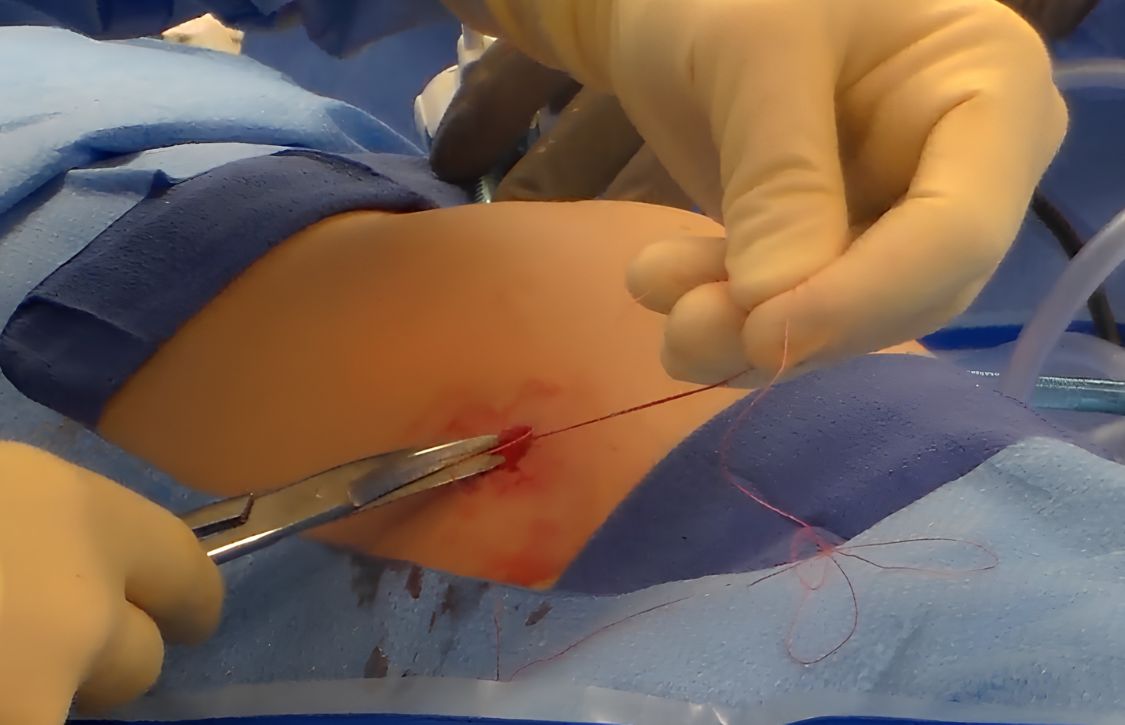
In fact, according to a comparison study, the data shows just how much technique alone shapes outcomes:
Guide-assisted closure produced fewer wound- and complication-related issues than traditional hand suturing across the study population.
Hand suturing depends heavily on individual surgeon skill, which often leads to inconsistent stitch placement and uneven fascial tension.
Meanwhile, guide-assisted devices standardize how each stitch gets placed, removing much of that variability.
Furthermore, devices built around snare loop technology retrieve suture without an extra grasping instrument, keeping closure fast and reducing tissue trauma.
As a result, reducing trocar site complications protects both patient wellbeing and hospital budgets at the same time. Indeed, surgeons who adopt a faster, more controlled technique often see fewer complications across their caseload, and ultimately, hospitals that standardize around one dependable device see steadier results across every surgeon.
Building a Prevention-Focused Closure Protocol
A written closure protocol gives every surgeon in your department the same starting point for technique. Faster, more predictable closure also reduces time under anesthesia for every patient. Clear guidelines reduce the guesswork that often leads to inconsistent outcomes across a surgical team.
Training new surgeons on this protocol early helps prevent trocar site complications from the very start of their career. Experienced surgeons can mentor newer colleagues using the exact same standardized closure approach. Additionally, tracking complication rates over time helps your team identify patterns tied to specific devices or techniques.
Quarterly review meetings give surgical directors a chance to adjust the protocol as needed. Suture Ease supports hospitals building these protocols with clinical data and hands-on training resources. Your surgical program gains a partner invested in reducing complications alongside your own team.
Ultimately, a written protocol turns prevention into routine practice instead of something left to chance. Every surgeon benefits from a shared standard that protects patients and reduces cost together.
The Financial Case for Preventing Complications
Hospital leadership often asks surgical directors to justify new equipment spending with clear financial reasoning. Preventing trocar site complications gives directors a straightforward case built around avoided costs.
Fewer readmissions and reoperations translate directly into real savings for the hospital budget. Surgical directors can present complication data alongside device costs to build a compelling business case. For instance, such comparisons often show that closure devices pay for themselves within a short period.
Furthermore, hospitals that reduce complications also see improvements in patient satisfaction scores across their surgical department. Satisfied patients are less likely to file complaints or pursue legal action after surgery. Both outcomes carry real financial weight beyond the direct cost of treating a complication.
Suture Ease can help your team build this financial case using data from your own surgical program. Our clinical team supports hospitals presenting closure technology decisions to leadership and finance committees. In turn, a strong financial case makes it easier to secure approval for better closure technology.
Ready to Reduce Trocar Site Complications at Your Hospital?
Trocar site complications carry real costs for patients and hospitals long after the original surgery ends. Guide-assisted closure devices reduce those complications while often shortening total closure time as well. A written protocol built around proven technique protects your surgical outcomes and your budget together.
Suture Ease can help your surgical team build a prevention-focused closure protocol from the ground up. Our clinical team supports training, device selection, and ongoing outcome tracking for your program. Get in touch with Suture Ease to start reducing complications across your surgical department.


Comments