
How a Laparoscopic Closure System Reduces General Anesthesia Time
- sutureease
- Apr 16
- 3 min read
Every minute under general anesthesia carries risk. Prolonged exposure increases the likelihood of adverse events, including cardiovascular stress, respiratory complications, and delayed recovery. In minimally invasive surgery, the goal has always been to reduce patient risk while maintaining clinical precision. Yet one step in the laparoscopic workflow is frequently overlooked: port site closure. A well-designed laparoscopic closure system can streamline this step significantly, reducing overall time under anesthesia and improving outcomes for both patients and surgical teams.
Why Laparoscopic Closure System Matters
Port site closure marks the final stage of a laparoscopic or robotic procedure. It happens while the patient is still under general anesthesia. That means any inefficiency at this stage extends anesthetic exposure unnecessarily.
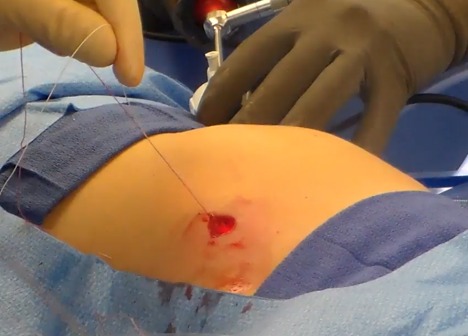
Research supports this concern. Studies comparing dedicated fascial closure devices to manual suturing show measurable differences in closure time. One clinical evaluation found that a dedicated suture device completed trocar-site closure in a mean of 87.9 seconds. Hand suturing, in contrast, averaged 128 seconds for the same task. Across multiple port sites, those seconds add up.
Faster, reliable closure directly reduces the window during which patients remain sedated. That matters most in high-risk populations, including elderly patients, those with cardiac or pulmonary conditions, and individuals with elevated BMI.
The Problem With Traditional Methods
Manual suture closure is technically demanding. It requires adequate visualization, correct needle placement, and consistent tension. In obese patients, tissue depth makes the process even more challenging.
Difficulty at closure is not just a time issue. Failed or inadequate attempts require correction, which extends the procedure further. Studies have shown that hand suturing carries a significantly higher failure rate than dedicated closure devices, particularly in patients with elevated BMI or greater abdominal wall thickness. Repeated attempts to achieve adequate fascial closure increase the risk of complications and prolong anesthetic duration.
How Device Design Affects OR Efficiency
The design of a closure device directly affects how quickly the team completes the closure step. Devices that are intuitive and require fewer steps allow surgeons to move through the closure phase with confidence and consistency. This is especially relevant in high-volume surgical settings.
Key device features that contribute to faster, more reliable closure include:
Predictable suture placement that reduces the need for repositioning or repeat attempts
A mechanism that simplifies suture retrieval, eliminating the manual steps that slow traditional closure
When a suture device functions reliably every time, surgeons do not need to troubleshoot during closure. That reliability translates directly into consistent OR efficiency and reduced time under anesthesia.
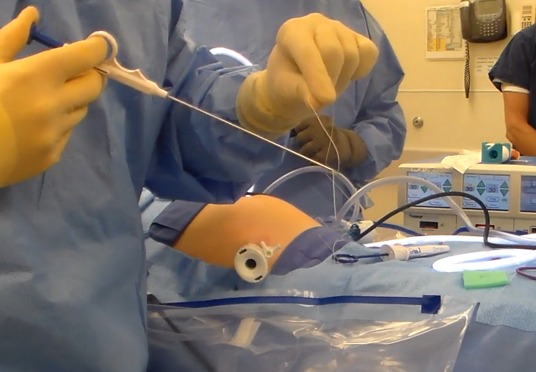
Research also indicates that device selection in laparoscopic procedures is a contributing factor in overall operative time reduction. Devices that are easier to operate correlate with shorter procedural durations.
Patient Recovery Begins at Closure
Reducing anesthesia time is not only an operational benefit. It has direct clinical implications for patients. Shorter anesthetic duration is associated with faster emergence from sedation, earlier mobilization, and reduced post-operative nausea.
The closure step also affects local tissue response. Precise, consistent fascial closure reduces the incidence of wound complications, including herniation and infection. When the closure is performed accurately and efficiently, patients experience less trocar site discomfort following the procedure. Less post-op pain means fewer complaints, smoother recovery, and earlier discharge.
Taken together, a faster and more accurate closure step benefits the entire care continuum, from the OR to the recovery room to the patient's return home.
Choosing the Right Laparoscopic Closure System
Suture Ease offers a full line of fascial closure devices purpose-built for laparoscopic and robotic procedures. The CrossBow Fascial Closure System was developed to simplify port site closure, save OR time, and deliver consistent, high-quality results. It uses proprietary snare technology that makes suture retrieval straightforward and enables reproducible placement every time. It has been used in over 150,000 procedures across leading hospitals and medical centers in the United States.
For bariatric patients or those requiring closure of larger extraction sites, the LongBow and the CrossBow with Adaptor technology extend those same advantages. Suture Ease is the only company offering a complete line of closure solutions, addressing the unique needs of each patient and each clinical setting.
If your team is looking to reduce anesthesia time, improve closure reliability, and enhance patient outcomes, explore the full Suture Ease today. Talk to us.


Comments