
Why Stability Is Key in a High-Performance Laparoscopic Trocar System
In laparoscopic surgery, precision is non-negotiable. Every instrument in the operating room must perform reliably—and the laparoscopic trocar system is no exception. Stability at the trocar level directly influences surgical outcomes, patient recovery, and overall procedural efficiency.
The Foundation of the Laparoscopic Trocar System
A trocar serves as the gateway to the surgical field. It provides the access point through which instruments are passed into the abdominal cavity. The cannula maintains position throughout the procedure, the seal mechanism preserves insufflation pressure, and the valve allows instruments to pass without disrupting internal conditions.
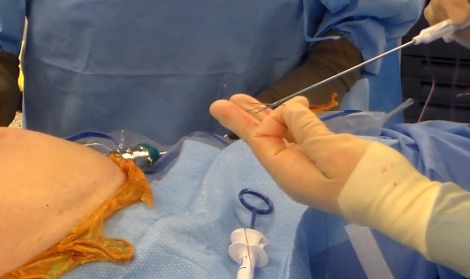
When any of these elements shifts or fails to hold position, the consequences can cascade quickly. Port displacement is a known intraoperative risk. If a port slides within the abdominal wall, it may need to be repositioned and secured with additional sutures, adding time and complexity to the case. Stability is not simply a convenience, but a clinical requirement.
How Instability Affects Surgical Outcomes
Trocar-related complications are more common than many clinicians realize. Approximately 50% of laparoscopic complications occur during trocar insertion and pneumoperitoneum establishment. Access-related issues include vascular injury, visceral injury, gas leakage, and loss of pneumoperitoneum.
Instability at the port site amplifies these risks. A trocar that shifts during the procedure can compromise visualization and instrument control. The surgeon is then working against the device rather than with it. This friction reduces precision and increases operative time.
Laparoscopic Trocar System: The Role of Fascial Closure in System Stability
Fascial closure is a critical component of trocar site management. It helps prevent port-site hernia, one of the most cited postoperative complications following laparoscopy. The fascia must be closed with suture to reduce hernia risk, particularly at incisions of 10 mm or greater.
Proper closure also reinforces the structural integrity of the abdominal wall after the port is removed. Without it, tissue gaps left behind can become sites of herniation or infection. A high-performance trocar system accounts for this step, making closure accessible, consistent, and reproducible, rather than an afterthought at the end of a case.
The following factors determine whether a fascial closure approach will hold up under clinical demands:
Reproducible suture placement that does not rely solely on tactile guesswork
A mechanism that reaches the fascial edge reliably, regardless of patient anatomy or body habitus
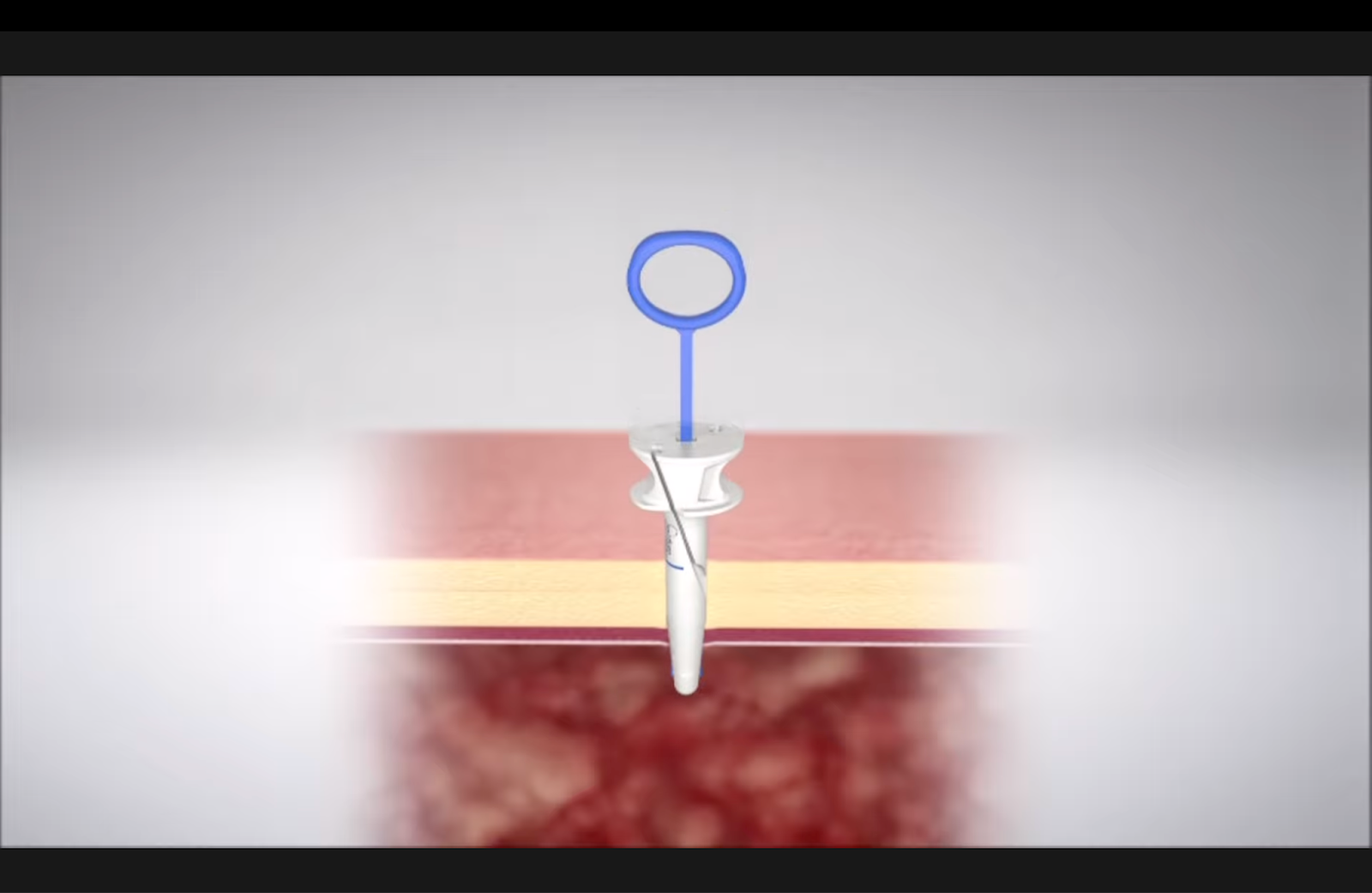
When these conditions are met, surgeons spend less time troubleshooting and more time focused on the patient.
Why Device Design Determines Performance
Not all trocar systems are engineered with the same level of care. Device design has a direct impact on how stable a port remains, how well the fascial layer can be accessed at closure, and how predictably the surgeon can place sutures.
Devices that are difficult to manipulate introduce variability into the closure step. Variability leads to inconsistent results. Inconsistent results raise the risk of post-op complications, including patient discomfort and hernia formation. Design simplicity, therefore, is not a cosmetic attribute. It is a functional one.
The following design qualities matter most in a reliable trocar closure system:
Ease of use that does not demand excessive training or technique adjustment
The capacity to handle varied port sizes, including larger extraction sites
Surgeons deserve tools that reduce cognitive and physical load, not add to it.
Precision Starts With the Right Laparoscopic Trocar System Partner
Suture Ease has built its product line around the principle that closure should be straightforward, repeatable, and kind to the patient. The CrossBow Fascial Closure System uses proprietary snare technology to simplify suture retrieval and enable reproducible suture placement. It has been used in over 150,000 procedures across leading hospitals and medical centers in the United States.
For bariatric patients or cases involving larger port sites, the LongBow Fascial Closure System extends that same performance at a greater depth, addressing a wider patient population. The CrossBow with Adaptor further expands capability, specifically designed to close large port sites and specimen extraction sites of approximately 15 to 20 mm.
Suture Ease is the only company offering a full line of closure solutions. These are all designed to meet the distinct needs of each patient, case, and surgeon. If your facility is ready to raise the standard for fascial closure, contact us to explore the full product line.


Comments