
Why Reproducibility Is Paramount in Surgical Fascial Closure
In laparoscopic surgery, precision does not stop once the procedure ends. How a surgeon closes trocar sites matters just as much as the operation itself. Surgical fascial closure that lacks consistency can lead to serious complications. Reproducibility is not a preference—it is a clinical standard.
What Reproducibility Means in Surgical Fascial Closure
Reproducibility refers to achieving the same accurate result across every case. In fascial closure, this means placing sutures correctly and consistently at every port site. A single misplaced suture can result in a port-site hernia or inadequate wound integrity.
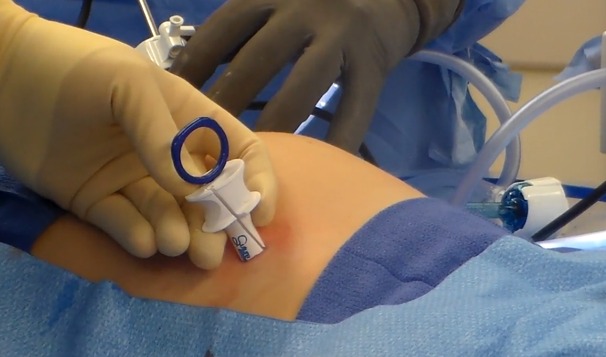
Inconsistent technique introduces variability. Variability introduces risk. Surgeons who rely on feel alone may achieve good results sometimes. However, "sometimes" is not acceptable in a surgical setting.
The Risks of Inconsistent Port-Site Closure
Incomplete or imprecise fascial closure carries real consequences for patients. Port-site hernias are among the most preventable post-operative complications. Yet they remain a documented risk when closure is not performed with adequate depth and placement.
Patient discomfort following laparoscopic procedures is often tied to how well trocar sites are closed. Poor closure can cause pain, wound complications, and even readmission. These outcomes affect patient satisfaction and place an unnecessary burden on care teams.
Beyond patient impact, inconsistent closure extends operative time. When a surgeon struggles with a device or technique, every extra minute in the OR adds cost and fatigue.
Why Technique Alone Is Not Enough
Training and experience build competence. However, even skilled surgeons encounter challenges with traditional closure methods. Many existing devices are difficult to maneuver in deep or obese patients. Some require multiple instrument exchanges, adding complexity to a routine step.
Human factors also play a role. Fatigue, case volume, and patient anatomy all affect performance. A technique that works in one patient may be far harder to execute in the next. Relying on manual dexterity alone creates inconsistency across a surgeon's caseload.
This is why device design matters. The right instrument should support, not challenge, the surgeon's ability to close accurately and efficiently every time.
Design Features That Support Consistent Surgical Fascial Closure
Well-designed fascial closure instruments reduce the margin for error. Certain features directly contribute to reproducible outcomes:
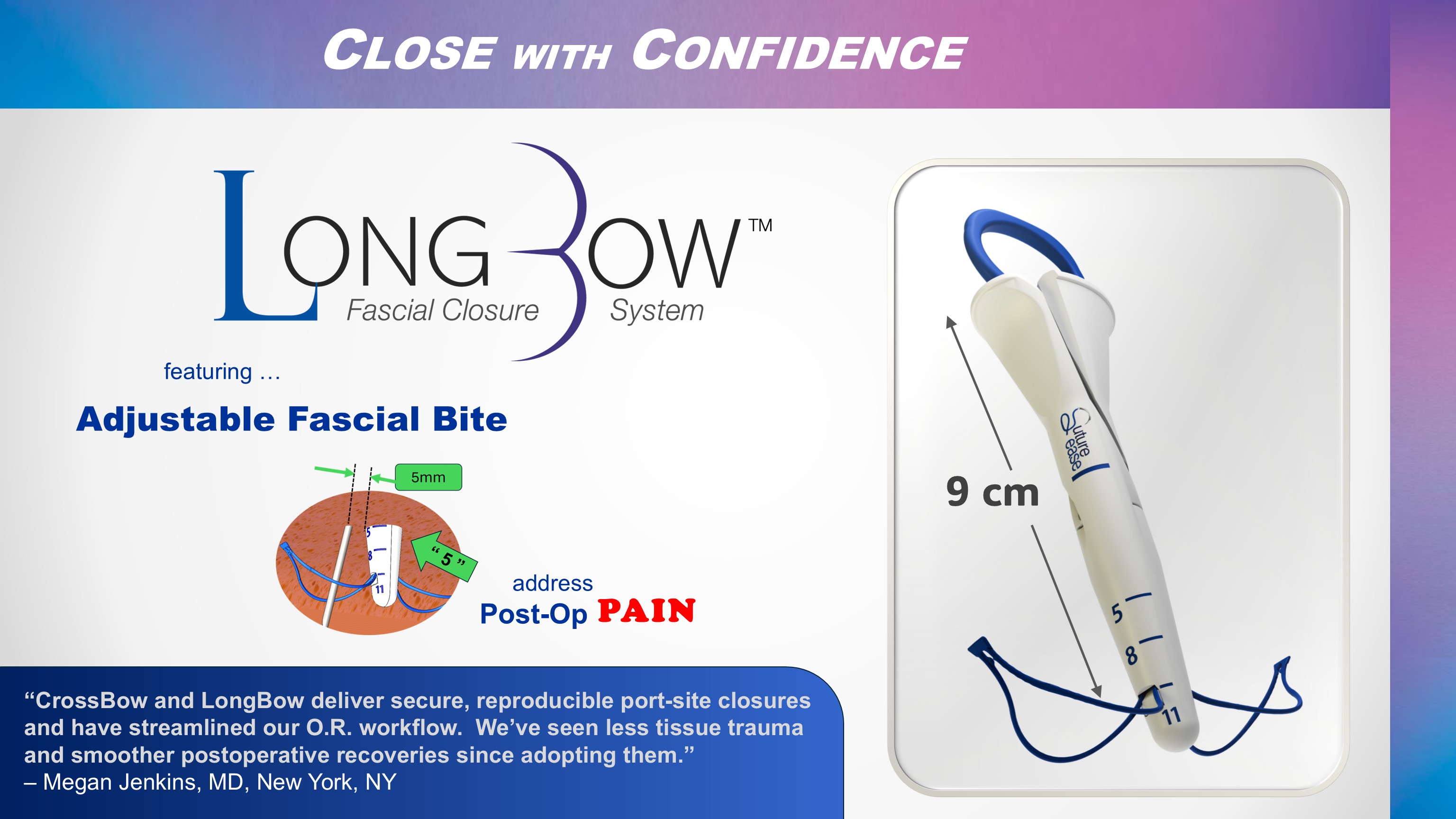
Suture guidance technology that controls suture placement depth and position
Intuitive handling that minimizes the learning curve and reduces steps in the closure process
These features are not just conveniences. They translate directly into predictable suture placement across varying patient anatomies and tissue conditions. A device that performs consistently allows the surgeon to focus on accuracy rather than instrument management.
Hospitals and surgical centers benefit as well. Standardized tools support standardized outcomes. When an entire OR team uses a reliable device, training becomes simpler and quality becomes more dependable.
How Instrument Choice Shapes Outcomes
The choice of closure device influences more than technique. It shapes the overall standard of care a facility can offer. Surgeons who adopt instruments designed for reproducibility report more confidence in their closures. Their patients experience less post-operative discomfort tied to poor wound management.
OR efficiency also improves. A straightforward, well-designed device reduces time spent on closure without sacrificing quality. That efficiency compounds across hundreds of cases per year.
Facilities that prioritize reproducible closure tools invest in both patient safety and operational performance. These two goals are not at odds—the right device serves both.
Elevate Your Closure Standard With Suture Ease
Suture Ease develops fascial closure devices specifically engineered for reproducibility and ease of use. The CrossBow Fascial Closure System uses proprietary snare technology to enable predictable suture placement every time. It has been used in over 150,000 procedures at leading hospitals and medical centers across the United States.
For facilities seeking a full range of closure solutions, Suture Ease is the only company offering a complete line of devices. The LongBow line extends that capability to meet the distinct needs of different patient anatomies and surgical preferences. Every product is designed to make closure simple, safe, and consistent.
Reproducible surgical fascial closure starts with the right instrument. Get in touch with Suture Ease and find the closure solution that fits your practice.


Comments