
Calculating O.R. Time Savings With Automated Fascial Closure
- sutureease
- Jun 25
- 3 min read
Fascial closure is one of the most variable steps in a laparoscopic procedure, and that variability is where O.R. time savings get lost before most facilities think to look for them. Operating room time carries a documented cost of $40 to $150 per minute, depending on procedure type, team size, and institutional overhead.
Against that figure, time lost at the closure step is not a minor inefficiency. It compounds across every case, every room turnover, and every quarter's operating margin. Because closure variability is so consistent, identifying where that time goes is the first step toward recovering it.
Three Points Where Manual Closure Loses O.R. Time
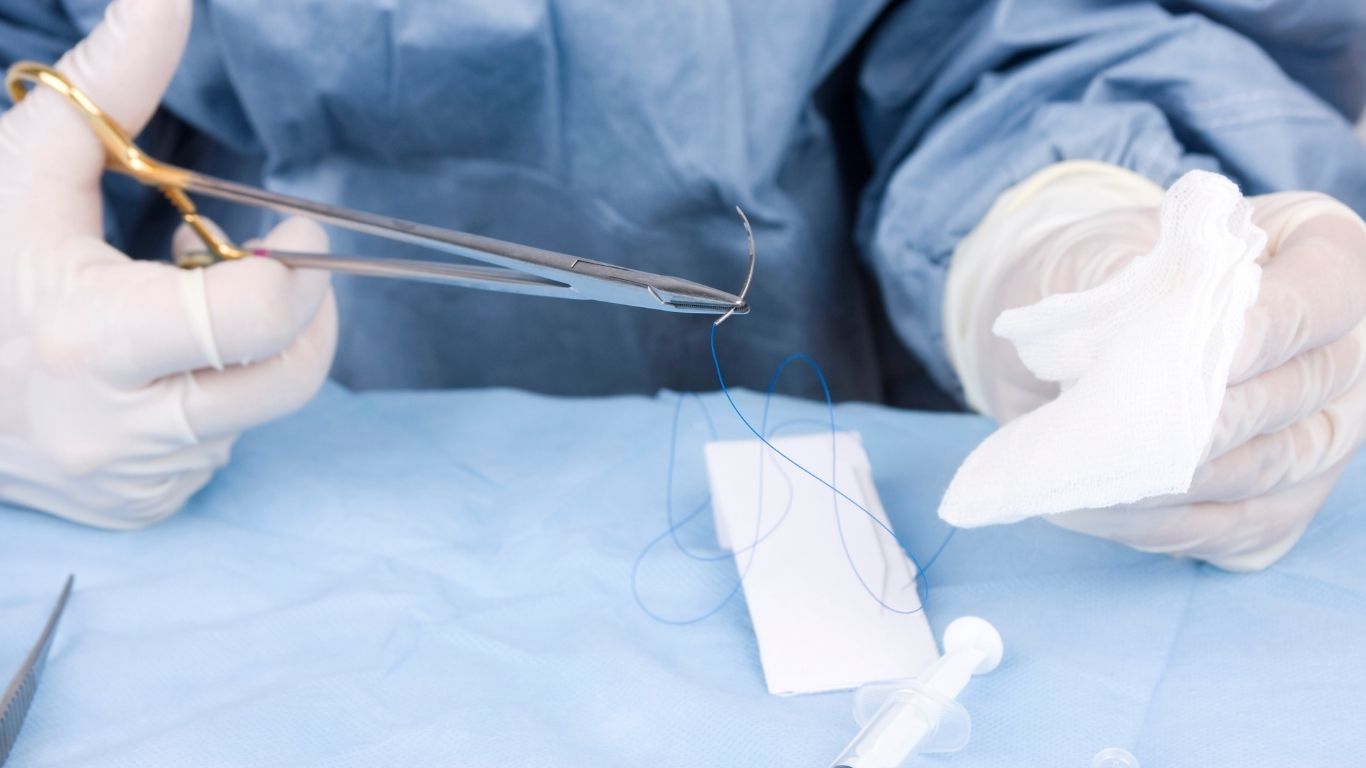
Suture retrieval is primary culprit. Without a reliable capture mechanism, retrieving the suture through the fascial layer requires extra instrument work or, in some cases, an instrument exchange entirely. Every detour here adds unrecoverable time. Furthermore, across a full surgical day, those detours accumulate into a meaningful operational cost that most schedules simply absorb without tracking.
What Semi-Automated Closure Changes
Semi-automated fascial closure replaces this cumbersome step with device-driven mechanisms. These mechanisms perform consistently regardless of surgeon hand position, patient anatomy, or tissue thickness. Studies on laparoscopic closure efficiency show that guided semi-automated devices reduce closure duration compared to manual techniques. The per-port reduction may look modest in isolation. Across multiple closures per case and multiple cases per day, however, cumulative O.R. time savings become operationally and financially significant. In other words, the compounding effect across a full schedule is where the real value appears.
The CrossBow's Approach to O.R. Time Savings
The CrossBow fascial closure system uses proprietary snare guide technology built to address all three loss points above. Specifically, the snare mechanism automates suture retrieval so the surgeon captures suture predictably on every pass instead of searching the peritoneum for it. That change alone removes the most consistent source of retrieval delay.
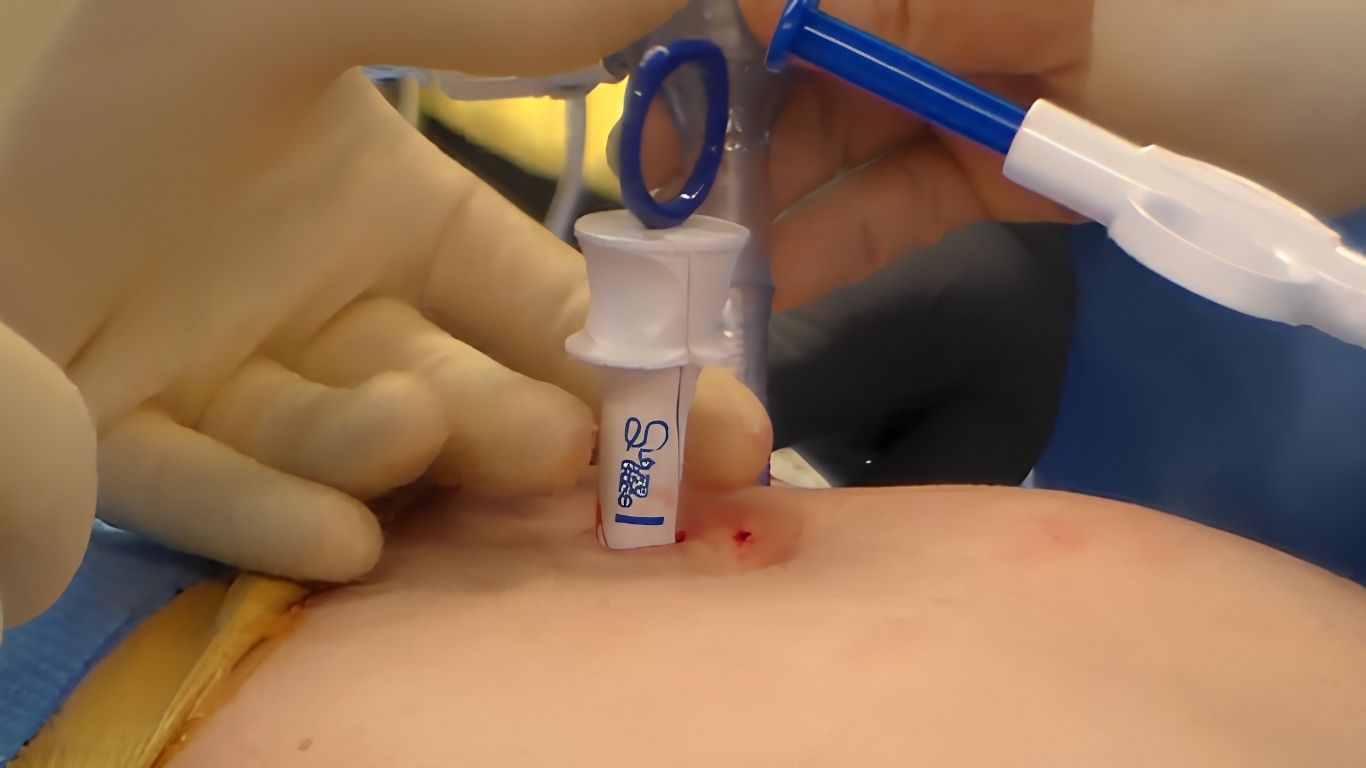
Additionally, the combined suture passer and snare guide enables reproducible tissue engagement, eliminating estimation and making repeat passes rare rather than routine. As a result, closure becomes a controlled, predictable step rather than a variable one. The CrossBow has been used in over 150,000 procedures worldwide, reflecting sustained performance across diverse surgical teams and patient populations.
From Device Efficiency to Facility Economics
Faster closure creates downstream effects that reach well beyond the individual case. For example, facilities that close faster turn rooms over faster and accommodate more cases within the daily schedule. Moreover, anesthesia exposure per patient decreases when closure time decreases.
These effects reach department throughput, patient experience, and facility margin in ways that unit cost comparison does not capture. Therefore, materials managers and coordinators who evaluate devices on purchase price alone miss the more meaningful number: total cost per case. That figure includes time extended by a slower device and time recovered by a better one. O.R. time savings at the closure step feed directly into that calculation.
Building the Internal Case for a Switch
The data needed to justify a closure device transition already exists within your facility. First, track closure time per port site across your surgical team. Then estimate the time lost to failed loading attempts and repeat passes. Finally, multiply that figure by your per-minute O.R. cost.
The resulting number typically makes the decision clear without requiring external benchmarking. Furthermore, the CrossBow's familiar guided approach means the transition does not require extensive retraining or a steep learning curve for your team. For more information on the full system specifications, contact us to talk about how they map to your case volume.


Comments