
Choosing the Right Laparoscopic Trocar Types for Minimally Invasive Access
Picking from the many laparoscopic trocar types available today shapes your entire approach to a case. Each design balances entry speed, tissue trauma, and visualization in a slightly different way. Your choice also decides how much attention the port site needs once the procedure wraps up.
Surgeons often default to whatever trocar their hospital stocks, without weighing the tradeoffs closely. Sticking with habit can leave you fighting a device that fits the case poorly. A closer look at laparoscopic trocar types helps you match the right tool to the right procedure.
What Are the Main Laparoscopic Trocar Types Used Today?
Laparoscopic trocar types generally fall into three groups: bladed, bladeless, and optical access systems. Bladed trocars cut through tissue quickly but carry a higher risk of vessel injury. Bladeless and optical designs separate tissue fibers instead of cutting, which many surgeons prefer for safety.
Comparing Laparoscopic Trocar Types by Design and Risk
Laparoscopic trocar types differ mainly in how they enter the abdominal wall and how much risk that entry carries. The table below breaks down each design by mechanism, advantage, and the tradeoff it brings. Use it to match the right trocar to the case in front of you.
Bladed | Sharp tip cuts straight through the abdominal wall in one motion | Fast entry, especially in thinner patients with less resistant tissue | Higher risk of injury to vessels or bowel beneath the surface |
|---|---|---|---|
Bladeless | Conical or dilating tip spreads muscle fibers apart instead of cutting | Fibers close back around the shaft, which can reduce bleeding at the site | |
Optical | Clear tip and camera let you watch tissue layers separate in real time | Confirms safe entry before the trocar fully seats | Relies on visual feedback rather than tactile cues |
Radially Expanding Sheath | Stretches an initial small puncture instead of cutting or dilating | Offers a fourth, less invasive entry option | Works best for planned, controlled dilation rather than rapid entry |
Every laparoscopic trocar type still leaves a fascial defect once the case finishes and the port comes out. Larger defects, generally 10mm and above, carry a meaningful hernia risk, as data on incisional hernia risk shows clearly. A dedicated closure system, like the CrossBow system, closes that same defect quickly once the trocar comes out.
Matching Trocar Size to Your Closure Plan
Choosing among laparoscopic trocar types means thinking past entry and straight through to closure. A 5mm port rarely needs formal fascial closure once the trocar comes out. Ports at 10mm or larger may need a deliberate closure step before the case ends.
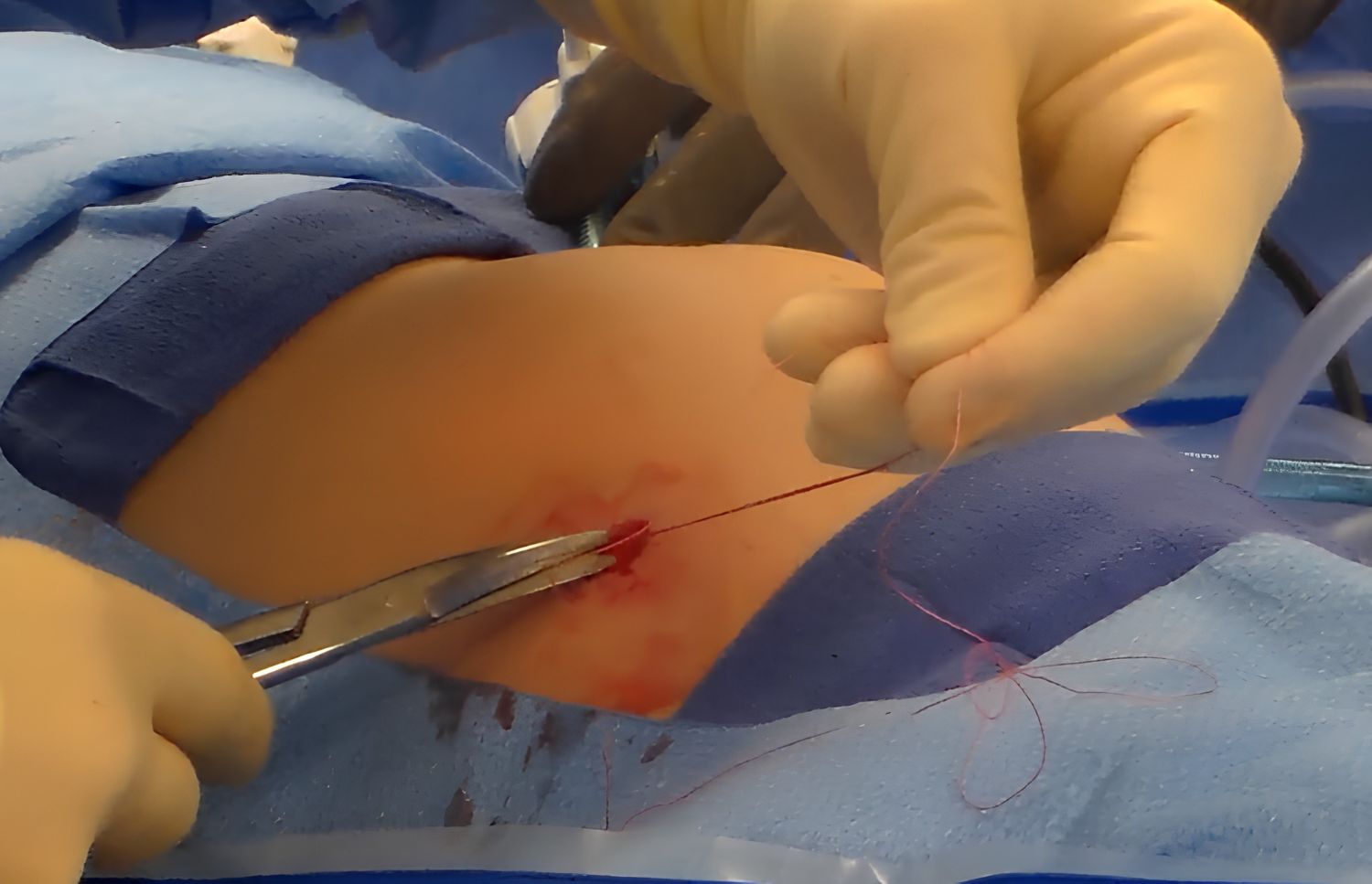
Trocar site hernias affect .5 to 5.2 percent of laparoscopic patients overall, according to a British Journal of Surgery review. Risk like that climbs further at larger port sites left without proper closure.
Planning your trocar selection alongside your closure device keeps the whole case moving without added delay. A guided closure system like CrossBow works cleanly with most common bladeless and bladed trocar defects. So your trocar choice and your closure plan should always be considered together, not separately.
Using the Pre-Close Technique for Robotic Procedures
Robotic procedures involving larger ports offer an opportunity to improve efficiency by planning fascial closure before the case begins. When closure is deferred until the end of the procedure, surgeons may need to scrub back in after leaving the robot console, adding an unnecessary step to the workflow.
Pre-placing fascial closure sutures early in the procedure eliminates this interruption, allowing the surgical team to complete closure without requiring the surgeon to return to the sterile field.
A technique built around early suture placement can also help reduce anesthesia time and free up valuable OR resources. Learn more about the potential to reduce general anesthesia time.
Example: Robotic Prostatectomy
Robotic prostatectomy is an ideal application for this technique. By placing the fascial closure suture before beginning the procedure, the team can prepare for closure in advance and streamline the final steps.
The technique is straightforward:
Establish initial access and insufflation.
Place the remaining ports, leaving the insufflation tubing connected to the initial access port.
Temporarily remove the lateral assistant port and use CrossBow to place an untied stitch.
Secure and tag the suture tails to the side, keeping them clear of the operative field.
Reinsert the lateral assistant port and transfer the insufflation tubing to that port.
Proceed with the planned surgical procedure.
At the conclusion of the case, undock the robot and remove the ports.
Have a qualified team member secure the pre-placed suture to close the lateral port site, without requiring the surgeon to scrub back in.
A Practical Approach to Greater OR Efficiency
Surgeons across multiple specialties have adopted early suture placement to streamline fascial closure. The technique is particularly well suited to non-extraction port sites, where defect size is generally more predictable.
As the surgical team gains experience over the first several cases, this approach can become a seamless part of the standard workflow—helping eliminate unnecessary steps, reduce demands on surgeon time, and improve OR efficiency.
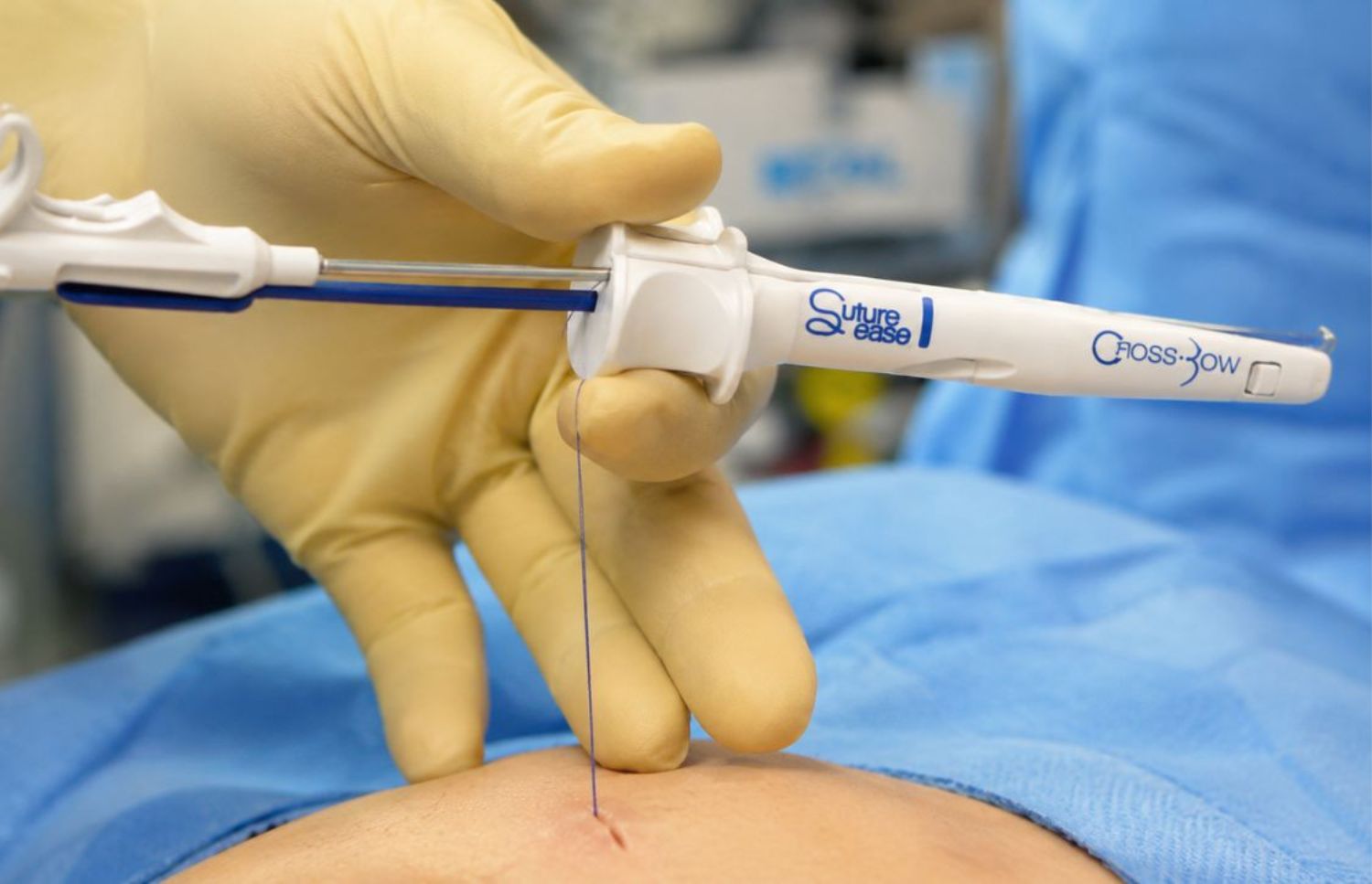
Suture Ease helps surgical teams think past access and plan for a confident, reliable finish every time. Our CrossBow and LongBow systems work alongside the trocar types your practice already uses daily. Pairing the right access device with the right closure plan protects your patients from start to finish.
You already weigh entry speed and safety when you select a trocar for each case. Give closure the same level of thought across every trocar type in your inventory. Contact Suture Ease to see how our closure systems fit your current setup.


Comments