
Why Manual Laparoscopic Port Site Closure Is Becoming Obsolete
Manual laparoscopic port site closure uses a curved needle with a suture guided with a needle driver. It depends on touch and visualization to direct fascial bites. In good conditions, surgeons can achieve adequate closure this way. The problem, however, is that laparoscopic surgery rarely offers good conditions at the closure step. The performance gap between manual laparoscopic port site closure and current guided systems has widened to the point where it carries direct consequences for patient outcomes and O.R. efficiency. Understanding why that gap exists points clearly to what needs to change.
By the time port sites close, insufflation is releasing, and the surgical field is harder to see. Tissue at the trocar site has taken stress throughout the case. Also, in bariatric patients, abdominal wall thickness makes touch-based guidance through standard instruments unreliable. These conditions describe a routine laparoscopic schedule. They are not edge cases. So they explain why manual laparoscopic port site closure produces the variability it does across different surgeons, patient types, and case complexity levels.
Why Reproducibility in Laparoscopic Port Site Closure Matters
Reproducibility separates adequate closure from optimal closure. A technique that works well with one skilled surgeon on one straightforward patient is not the same as a system that delivers consistent results across surgeons, patient types, and case difficulty. Moreover, reproducibility requires a guided mechanism that controls placement geometry on its own. Without that mechanism, closure quality shifts with conditions that no training program can fully remove.
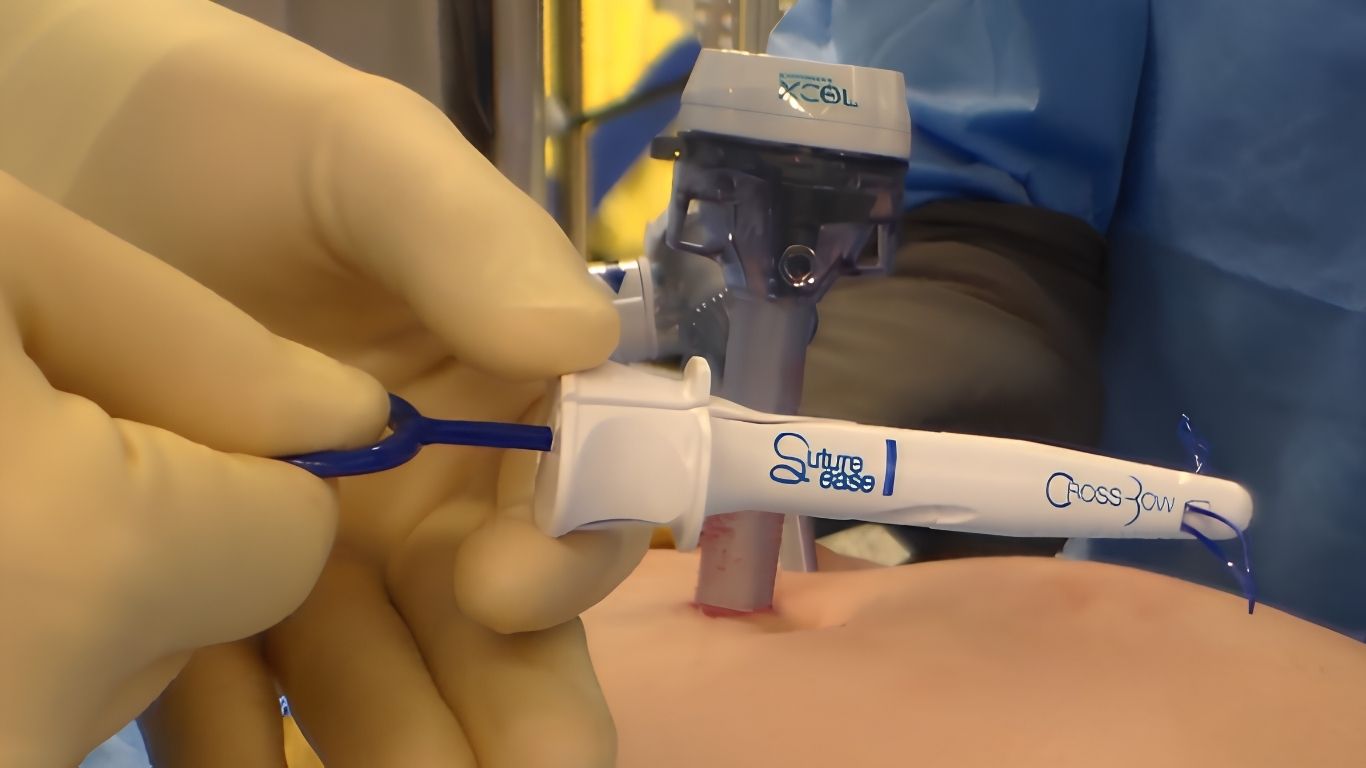
Research on laparoscopic closure outcomes records the link between consistent fascial bite depth and port site hernia incidence. Inaccurate suture placement that shifts with technique produces a hernia risk that shifts by case. Therefore, removing that variation requires moving past manual laparoscopic port site closure. Surgeons can access the devices to make that transition now, and the clinical case for using them has become hard to argue against.
The Cost of Variability Across a Caseload
The problems from inconsistent manual laparoscopic port site closure extend beyond individual adverse events. Across a full caseload, variable closure quality creates a group of patients with elevated complication risk that teams cannot predict or sort at the point of care.
Port site hernias, while uncommon, represent one of the most preventable complications in laparoscopic surgery. When they do occur, the cause is rarely patient-specific; body type and activity level may influence tolerance for an imprecise closure, but they do not excuse it. That kind of outcome variability is difficult to justify when the tools to eliminate it already exist. Furthermore, the annual cost of managing even a handful of hernia revisions typically exceeds the cost of transitioning to a guided closure system many times over.
Where the LongBow Advances the Standard for Laparoscopic Port Site Closure
The LongBow fascial closure system delivers guided closure for the full patient population. This includes bariatric patients, where manual technique fails most visibly and most often. Specifically, the LongBow provides a 9 cm effective penetration depth. It reaches the fascial layer in patients where standard closure devices fall short.
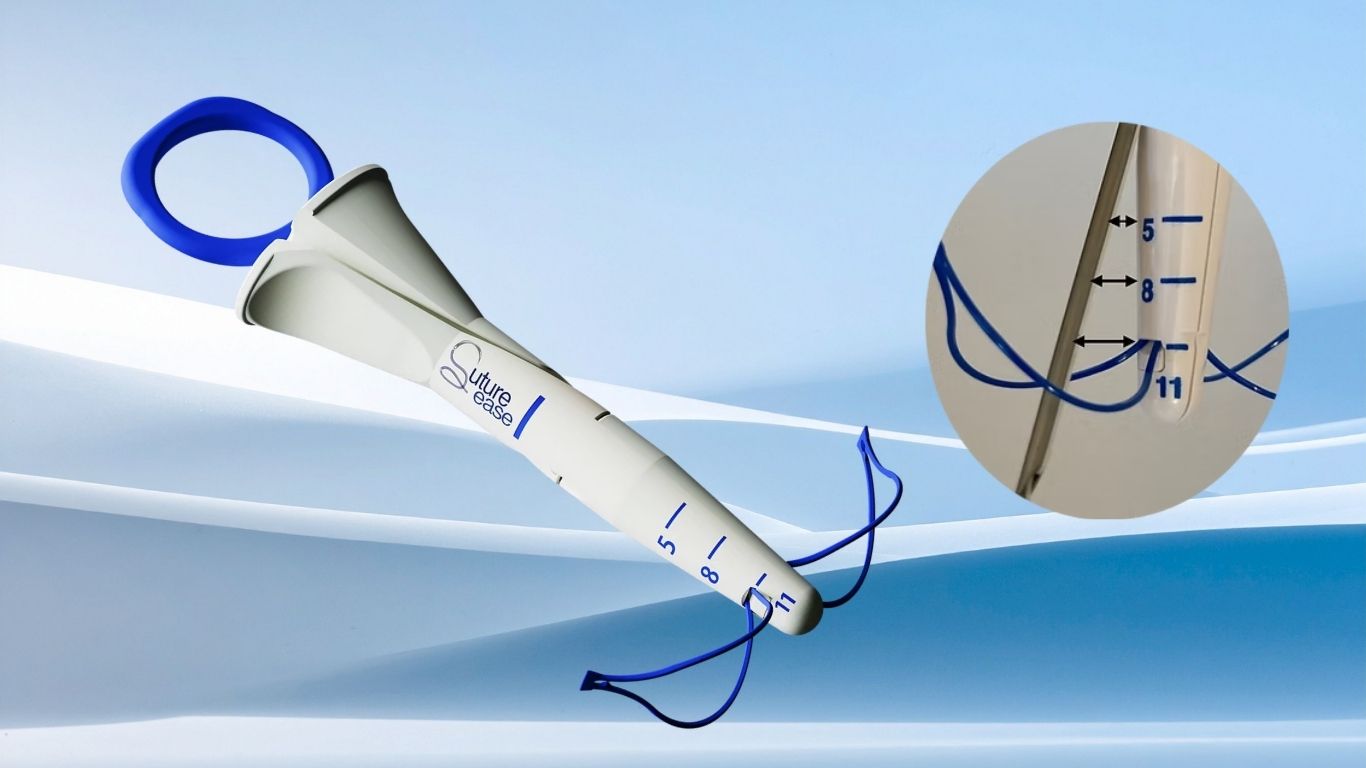
Its adjustable fascial bite lets the surgeon set depth to match the patient's body rather than accepting whatever manual guesswork produces. As a result, the surgeon gets a controlled, repeatable result instead of a variable one. Suture Ease designed the LongBow to carry the same performance profile as its full product line: safe, quick, and reproducible closure with predictable suture placement across every patient type it serves.
The Direction the Field Is Moving
Device adoption in laparoscopic surgery follows a clear pattern. New tools first appear as upgrades for complex cases. Then they spread into standard practice across routine caseloads as their consistency and efficiency gains build up.
Guided fascial closure follows that same path now. Facilities that make the switch set a higher standard of care. Those who hold to manual laparoscopic port site closure, however, keep a baseline that the rest of the field is leaving behind. The switch does not mean discarding surgical skill, it means pairing that skill with instruments built to extend it into repeatable results on every patient, every case, every day. Ask about the LongBow for your bariatric and standard laparoscopic caseload by reaching out on our contact page.


Comments