
The Role of Proper Stitch Placement in Abdominal Wall Closure Success
Abdominal wall closure might seem like a routine final step in laparoscopic and robotic surgery, but the details of stitch placement carry lasting consequences for patients. Get it right, and patients recover with minimal discomfort and low hernia risk. Get it wrong, and the same port site can become a source of chronic pain or a future surgical complication.
This distinction matters most in high-volume surgical settings, where even small variations in technique across surgeons can add up to meaningful differences in patient outcomes over time. Every port site of 10mm or larger carries this same closure requirement, yet the technique used varies widely from one operating room to the next. Surgical teams that treat abdominal wall closure with the same rigor as the rest of the procedure likely tend to see fewer complications and more predictable recoveries.
Why Stitch Placement Shapes Abdominal Wall Closure Outcomes
Stitch placement determines how evenly tension spreads across the fascia during abdominal wall closure. Sutures placed too close to the defect edge risk tearing through weaker tissue. Sutures placed too far away can trap fat and excessive fascial tissue. Surgeons trained in open procedures often rely on tactile feedback that laparoscopic surgery removes entirely. Without direct touch, judging the right distance from the defect becomes far more difficult.
Guided devices solve this problem by giving surgeons visual indicators for repeatable stitch placement every time. Such indicators show exactly where to pass the needle relative to the fascial edge. Such guidance replaces the tactile feedback surgeons lose during minimally invasive procedures overall.
Reliable stitch placement, therefore, protects abdominal wall closure quality regardless of the surgeon's experience level. Newer surgeons especially benefit from tools that remove some of the guesswork involved. In fact, many training programs now build guided technique into their curriculum from the very start.
How Fascial Bite Size Affects Patient Outcomes
Fascial bite size refers to how much tissue a surgeon captures with each stitch during closure. Research comparing large bite to small bite suturing shows a clear link to patient pain scores. Getting the fascial bite right depends on a few key factors tied to each patient.

Larger bites tend to cause more post-operative discomfort in patients with otherwise healthy tissue.
Patients with poor tissue quality often need a larger bite to prevent the suture from tearing through weak areas.
Surgeons, therefore, weigh tissue quality carefully before selecting the right closure approach for each patient.
A one-size-fits-all approach to abdominal wall closure ignores real differences between patients and cases.
Devices with adjustable bite indicators let surgeons make that adjustment without relying on guesswork.
Tailoring bite size to tissue quality reduces pain for healthy patients while protecting weaker tissue from failure. Such a balance depends on reproducible suture placement that doesn't rely on tactile guesswork alone. Consequently, surgeons who master this adjustment protect patients across a much wider range of tissue types.
Building Better Habits Around Stitch Placement
Surgical teams benefit from reviewing stitch placement technique during regular training sessions throughout the year. Reinforcing fundamentals like consistent knot-tying technique can highlight small variations between different surgeons. Peer feedback sessions also help surgeons refine small details they might otherwise overlook.
Mentorship between experienced and newer surgeons also helps standardize technique across a growing surgical team. Peer feedback sessions also help surgeons refine small details they might otherwise overlook. Furthermore, tracking outcomes by surgeon can reveal where additional coaching might improve abdominal wall closure results.
Surgical directors can use this data to guide focused, supportive training rather than general reminders. Positive framing around improvement tends to work better than singling out individual surgeons.
Suture Ease supports hospitals building these training habits with clinical resources and hands-on guidance. Our team can help your surgical program strengthen stitch placement across every single case. Ultimately, small habit changes compound into meaningfully better outcomes across an entire surgical department over time.
Choosing the Right Device for Reliable Stitch Placement
Device choice plays a direct role in how reliably a surgical team achieves proper abdominal wall closure. Guide-assisted devices with visual indicators remove much of the guesswork from fascial closure. Surgeons across different experience levels benefit from the same repeatable reference points every time.
Devices built around snare loop technology also simplify suture retrieval without adding extra steps. Such simplicity keeps surgeons focused on placement rather than instrument management during closure.
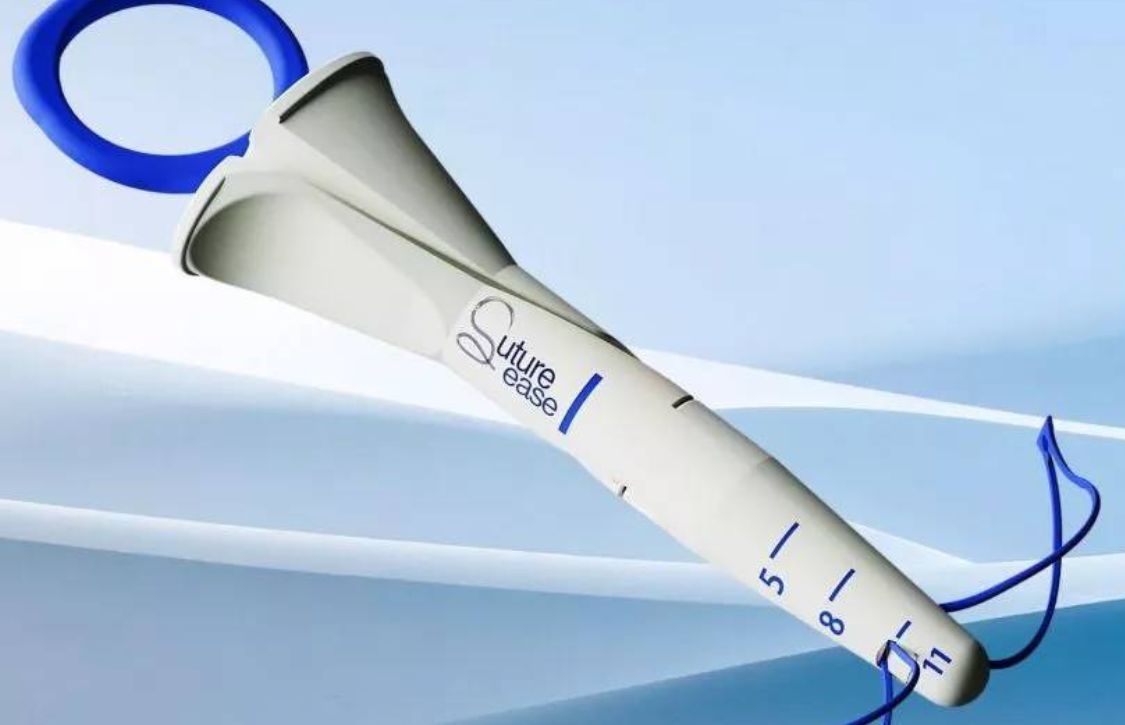
Meanwhile, adjustable devices let surgeons customize bite size for each patient without switching equipment mid-case. A single dependable device that covers multiple defect sizes also simplifies training and inventory management. Hospitals achieve steadier outcomes without requiring surgeons to master multiple separate closure tools.
Suture Ease designs its devices around these exact principles of reliable, patient-specific closure. Our team can help your surgical program select devices that support strong stitch placement habits. In short, the right device turns good technique into a repeatable standard across your entire department.
Ready to Strengthen Your Abdominal Wall Closure Technique?
Abdominal wall closure quality depends on stitch placement just as much as the device a surgeon uses. Guided devices with visual indicators help surgeons place stitches with reliable accuracy, regardless of experience level. Adjustable bite size lets your team tailor technique to each patient's individual tissue quality.
Suture Ease builds devices designed around these exact principles of reliable, patient-specific closure. Our clinical team can help your surgical program refine technique and reduce complications together. Get in touch with Suture Ease to strengthen your abdominal wall closure protocol today.


Comments