
A Technical Review of the Latest Suture Passer Device Innovations
- sutureease
- Apr 2
- 3 min read
Laparoscopic surgery continues to evolve at a rapid pace. At the center of many procedural advancements is the suture passer device, a specialized instrument that has undergone significant engineering improvements in recent years. Understanding these developments helps surgical teams make informed procurement and procedural decisions.
How a Suture Passer Device Works
A suture passer functions as a remote-controlled needle driver. It allows surgeons to grasp a needle and thread it through tissue without requiring a large incision. The core mechanism involves inserting the instrument through a trocar port, capturing the suture, and delivering it to the target tissue layer with controlled precision.
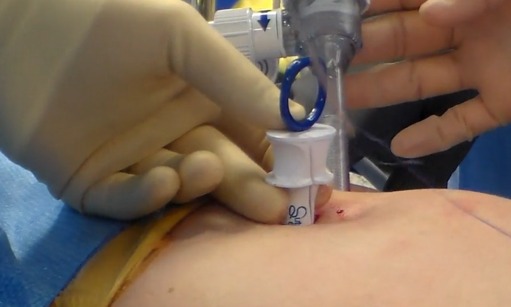
Port sites measuring 10 mm or larger require fascial closure to prevent post-operative herniation. The suture passer is the primary tool used to achieve this. Its role in maintaining abdominal wall integrity makes it an essential component of any laparoscopic procedure.
Key Engineering Advances in Recent Suture Passer Device Designs
Modern suture passers reflect meaningful improvements in three critical areas: structural integrity, suture handling, and ergonomics.
Needle shaft stiffness is one notable advancement. Stiffer shafts are less prone to bending or breakage under the mechanical demands of tissue penetration. This translates directly to greater reliability during closure steps.
Suture capture and release mechanisms have also improved. Tong-style jaw designs now offer wider apertures, making it easier to load and retrieve suture material. Some devices also incorporate dedicated suture ejection features, enabling more predictable release.
Ergonomic handle design is another area of active development. Instruments now emphasize reduced hand strain and lower surgeon fatigue. This is particularly relevant in high-volume surgical environments.
Snare Technology and Reproducible Placement
One of the more impactful technical contributions to fascial closure is snare-guide technology. This mechanism simplifies suture retrieval by creating a guided path for the suture loop. The result is more consistent, reproducible suture placement across varying patient anatomies.
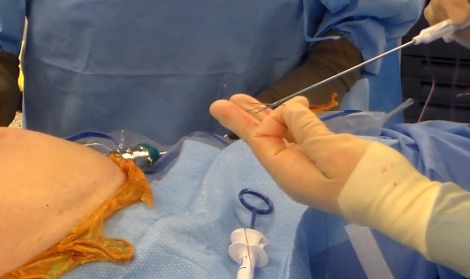
Reproducibility matters clinically. Inconsistent suture depth or spacing can increase the risk of tissue ischemia, hernia formation, or post-operative discomfort. Snare-guided systems address this by reducing the variability that comes with freehand passing techniques.
Adaptor Systems and Patient-Specific Closure
Standard fascial closure instruments are designed for typical trocar port sizes. However, some procedures involve larger extraction sites or bariatric patients, which demand extended reach and wider closure capability.
Adaptor-based systems have emerged to address this gap. These components attach to existing closure platforms to accommodate port sites ranging from approximately 15 to 20mm. They also allow for multiple suture placements in optimized stitch patterns, which is critical for larger defects.
For bariatric patients specifically, extended-length instruments provide the penetration depth needed to reach the fascial layer effectively. This patient-specific approach reflects a broader shift in device design toward adaptability. This focus on accommodating diverse patient anatomies is essential for improving surgical outcomes. The development of specialized tools ensures that surgeons can maintain precision and control, regardless of the patient's body habitus.
Suture Ease Offers a Full Closure Solution
For surgical teams evaluating their fascial closure options, Suture Ease offers a comprehensive line of purpose-built instruments. The CrossBow Fascial Closure System features the proprietary snare-guide mechanism, enabling reproducible trocar site closure with predictable suture placement. It has been used in over 150,000 procedures at leading U.S. hospitals and medical centers.
The LongBow extends the same capabilities to bariatric patients through its increased penetration depth and adjustable fascial bite. Both systems are also available with the ADAPTOR component for larger port or specimen extraction sites.
Suture Ease is the only company offering a full range of closure solutions designed to meet each patient's unique anatomical needs. This breadth of options means surgical teams no longer need to compromise. Every case can be approached with the right instrument.
If you are ready to streamline trocar site closure in your OR, contact Suture Ease to explore the CrossBow and LongBow product lines.


Comments