
Top O.R. Efficiency Tools Every Surgical Coordinator Should Know
For surgical coordinators, O.R. efficiency tools aren’t “nice extras.” They are the difference between a schedule that stays on track and a day that drifts case by case.
In laparoscopic services, the biggest time leaks are rarely the headline technology. They show up in small, repeated interruptions: a scope that needs cleaning, a tray missing one item, an end-of-case closure that varies widely, or a turnover pattern nobody can explain because it isn’t measured.
Below are five categories coordinators are using in 2026 to reduce avoidable delays, without asking teams to “just move faster.”
Automated Lens Cleaning Systems That Protect Continuous Visualization
When the laparoscope lens fogs or collects debris, the case loses momentum. The team pauses the active phase, removes the scope, cleans it, and reinserts; sometimes repeatedly.
Systems such as OpClear® are designed to maintain vision by delivering fluid and gas across the lens during the case. A published study in 2024 evaluated OpClear during total laparoscopic hysterectomy. The manufacturer also cites “clinically shown” time savings for scope cleaning, referencing supporting sources on its site.

Coordinator takeaway: treat “loss of vision” as a measurable delay category (not a nuisance). If you can reduce scope removals, you reduce micro-stoppages that quietly extend wheels-out time.
Procedure-Specific Custom Trays That Prevent “Scavenging”
A circulating nurse leaving the room to find a missing instrument or supply is one of the most avoidable workflow breaks. Customized trays and packs aim to keep case-critical items together and consistent across rooms and shifts.
Mölnlycke describes ProcedurePak® trays as a way to reduce preparation time compared with traditional setup, and notes that prep time can be reduced substantially versus assembling individually packaged items.
Coordinator takeaway: the value is consistency. A well-built custom tray reduces variability in setup and lowers the chance of “we forgot that one thing.”
Quick Build Tip for Tray Standardization
Lock a baseline tray to a procedure type (not a surgeon preference)
Add surgeon-specific deltas only when they’re truly case-critical
Review tray content quarterly using actual pick data (what gets opened vs. wasted)
Dedicated Fascial Closure Solutions That Tighten the End-Of-Case Finish
The end of a laparoscopic case is where many schedules quietly slip. Fascial closure at larger ports can be slow and inconsistent, especially with deeper abdominal walls.
Suture Ease’s CrossBow™ and LongBow™ are built around a guided workflow and a snare-loop concept to support consistent capture and retrieval. In a small evaluation of predecessor snare-loop technology (SecurusDL), reported mean closure time was 67 seconds (range 45–96) with observations of uniform, symmetric stitch placement.
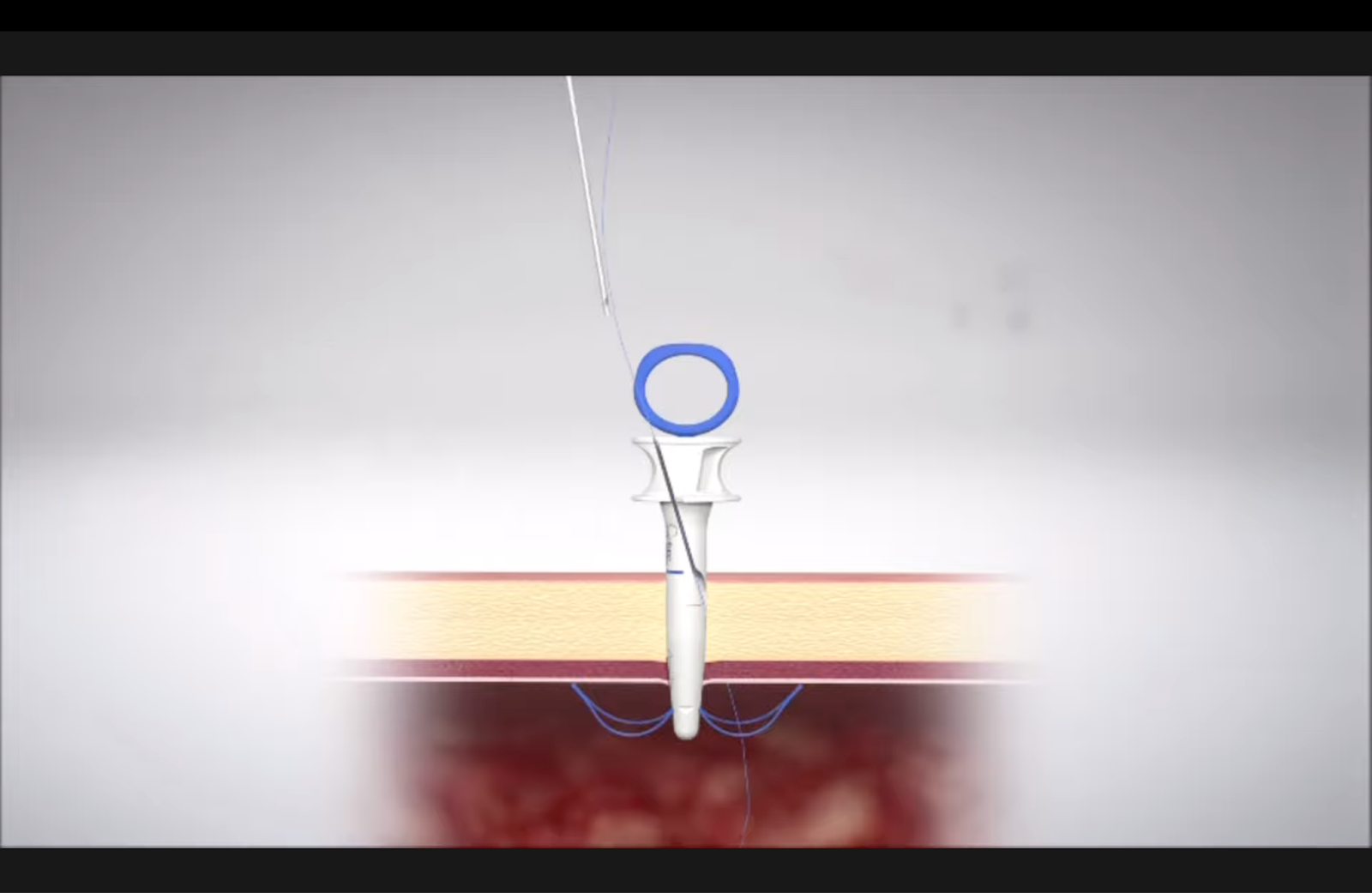
Suture Ease’s clinical literature overview also discusses trocar site hernia incidence ranges and the common recommendation to close ports ≥10 mm.
Coordinator takeaway: closure is often the highest-variance step near the finish line. If you standardize closure tools and training, you reduce late-case unpredictability that affects turnover and staffing.
Multi-Tool Laparoscopic Prototypes That Reduce Instrument Exchanges
Instrument exchanges are small interruptions that add up: withdraw, swap, reinsert, reorient, regain the view, continue. “Multi-tool” concepts aim to reduce those exchanges by enabling in-body switching of tool tips or functions.
The Symphera system is one example described as an intracorporeal tool-tip switching approach. A 2025 publication describes evaluation of a laparoscopic multi-tool prototype intended to reduce instrument changes and workflow interruptions. (Some elements may still be under investigation or not yet widely deployed; treat this category as “watch and evaluate” rather than automatic adoption.)
Coordinator takeaway: this category matters most in long cases and services with frequent tool switching. Track exchange counts as a proxy metric when evaluating whether a new system changes flow.
Surgical Workflow Analytics Software That Turns Time Into Action
If you can’t see where time is lost, you can’t fix it. Coordinators are increasingly using analytics tools to track performance from wheels-in to wheels-out, turnover patterns, and the “closure-to-exit” segment that often varies by surgeon and case type.
LeanTaaS, for example, positions its operating room solution around real-time analytics and operational recommendations for perioperative leaders.
Coordinator takeaway: analytics isn’t about ranking surgeons. It’s about spotting repeatable delay patterns, then matching the right intervention (lens cleaning protocol, tray redesign, closure standard work) to the right segment of the case.
A Simple Way to Compare O.R. Efficiency Tools by Where They Help
Tool Category | Primary Benefit | Where It Reduces Delays |
|---|---|---|
Lens cleaning systems | Sustained visualization | Active-phase stoppages for scope cleaning |
Custom trays / packs | Consistent setup | Setup drift + missing-item trips |
CrossBow™ / LongBow™ closure | More repeatable end-of-case closure | Closure-to-exit variability |
Multi-tool concepts | Fewer exchanges | Repeated withdraw/swap/reinsert cycles |
Workflow analytics | Visibility into delay drivers | Targeting changes to the right step |
Finishing Strong: What Coordinators Should Standardize First
If you’re choosing where to focus, start with the steps that create the most variance across cases:
Vision interruptions (scope cleaning events)
Setup misses (missing items, opened-but-unused waste)
End-of-case closure variability (especially at larger ports and deeper abdominal walls)
Turnover root causes (cleaning, equipment readiness, staffing handoffs)
Consistency is what makes time predictable. And predictability is what makes schedules real.
Contact us for more information about CrossBow™ and LongBow™ and how standardized fascial closure can support your O.R. efficiency initiatives.


Comments