
Why Handle Ergonomics Are Critical in Modern Suture Passer Design
Suture passer design is frequently treated as a comfort issue rather than a clinical one. That framing understates the real problem. A handle that demands abnormal grip pressure produces measurable consequences: longer closure time, inconsistent suture placement, and physical strain that builds up across a full surgical day. A narrow aperture that must be loaded under fatigue adds the same costs. Research on surgical instrument design links poor tool ergonomics to repetitive strain injury, reduced precision, and early career burnout in operating surgeons. These are clinical and workforce risks. They deserve the same scrutiny as any other factor in suture passer design selection.
What Fascial Closure Demands From Suture Passer Design
The closure step places specific demands on the surgeon's hands. The instrument must push through dense fascial tissue. At the same time, the surgeon must maintain field visualization. Suture must be loaded, passed, and retrieved. Each step requires precise control of both angle and force. Furthermore, all of this happens after fatigue has already built up from the case itself.
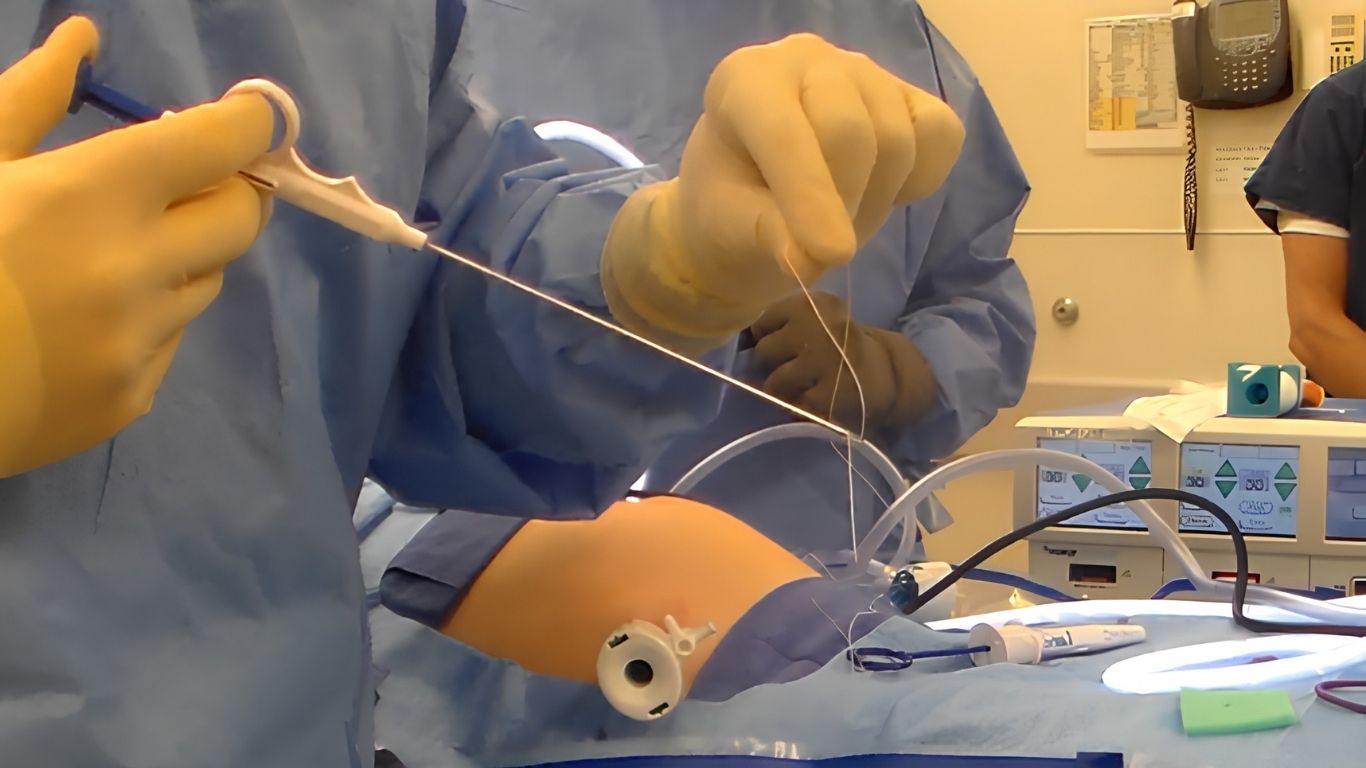
A suture passer design that ignores this context creates problems. The surgeon must adjust through extra grip force or a shifted wrist angle. Each adjustment speeds up fatigue and reduces placement precision. Because both costs arrive together, poor suture passer design affects closure quality and closure time at the same moment.
The conditions that make this most visible are also the most routine. A surgeon closing the fourth port site of the day, on a patient with a higher BMI, after a two-hour procedure, is not in an unusual situation. That is a standard laparoscopic schedule. A device that performs well at the start of a fresh case but degrades under tired hands is not adequate suture passer design. It performs well when it is needed least and fails when it is needed most.
What Good Suture Passer Design Requires in Practice
A handle must support a natural grip near a neutral wrist position. The surgeon should not have to fight the instrument while engaging tissue. The actuation force must stay low and consistent. That way it remains controllable when hand strength has dropped from a long case.
Suture capture and release must work on the first attempt, every time. Repeated attempts under fatigue slow the closure step. They also introduce error at exactly the moment precision matters most. These are not aspirational criteria. They are basic requirements that determine whether a suture passer performs well across the full range of daily O.R. conditions.
Good suture passer design also requires that features work together as a system. A wide aperture jaw is less useful when actuation force is high. A stiff needle shaft matters less when the handle forces an awkward wrist angle during tissue engagement. The way design elements interact is what separates purpose-built instruments from those that fix one problem while creating another. A suture passer should reduce total demand on the surgeon, not redistribute it.
How the SecurusEP Addresses Suture Passer Design for Late-Case Performance
The SecurusEP suture passer treats late-case conditions as a design requirement, not an afterthought. The needle shaft is built to four times the stiffness of economy suture passers. As a result, it holds its path through dense tissue rather than bending under lateral pressure.
The tong-style capture mechanism features a large jaw aperture. Loading the suture into a wide jaw requires far less fine motor control than threading a narrow one. At the end of a hard case, that difference shows up reliably as a clean first-attempt load rather than a frustrating second one.
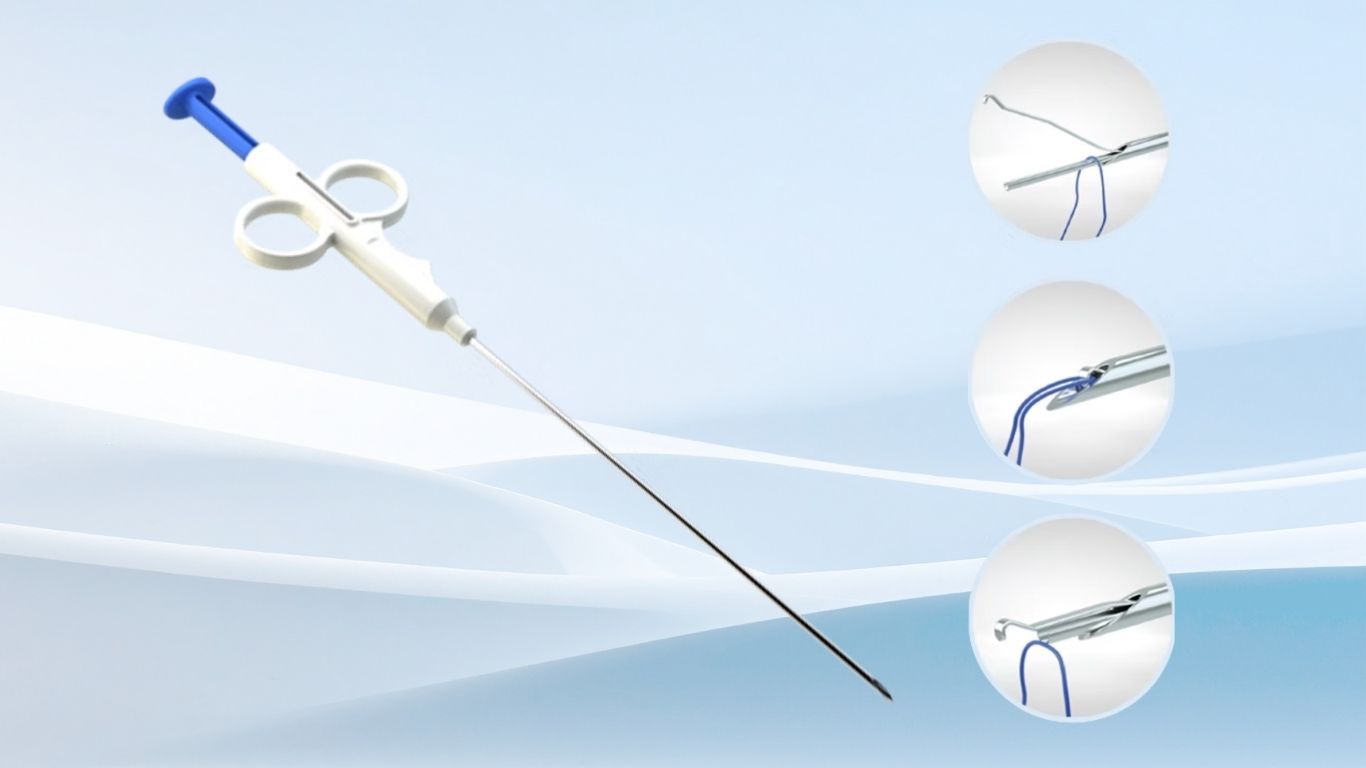
Moreover, the suture ejection feature removes the manual release step entirely. Ejection is automatic and consistent. The surgeon does not need to work the suture free while holding instrument position in the field. Each of these design choices reduces what the device asks of the surgeon's hands at the moment those demands should be at their lowest point in the procedure.
Performance Across the Full Surgical Schedule
One case does not test endurance the way a full day does. However, the SecurusEP's design advantages build across cases in ways that single-procedure evaluation misses. Ergonomics that result in less hand effort per closure means less fatigue over time. Less fatigue, in turn, means more consistent placement in the fourth, fifth, and sixth cases of the day.
Consistent performance across the full schedule is the real argument for investing in better suture passer design. It is also the argument that materials managers and coordinators should weigh at the procurement stage. The cost of inconsistent late-day closure performance reaches patient outcomes in ways that unit price comparison does not capture. Request a sample and evaluate what this engineering delivers in your own O.R. using our contact form.


Comments