
Advanced Alternatives to the Standard Carter-Thomason Suture Passer
- sutureease
- Jun 18
- 3 min read
Many O.R. teams still reach for the Carter-Thomason suture passer by habit. They do this not because it outperforms what is currently available, but because it is familiar. When it first appeared, it offered a real step forward over blind manual suturing. It gave surgeons a guided approach to fascial closure at trocar sites. That was meaningful progress. Decades later, however, today's laparoscopic caseload demands faster procedures, broader patient populations, and devices that hold up under the pressure of a full surgical schedule. The Carter-Thomason suture passer no longer meets those demands, and the gap affects O.R. efficiency, closure quality, and patient outcomes.
Where the Carter-Thomason Suture Passer Creates Friction
Surgeons most often report the narrow needle aperture as the challenging problem. Due to the restricted needle motion, capturing a suture within a narrow aperture requires careful thread control. With thicker or slippery suture material, the step often needs multiple attempts. At the end of a case, those extra attempts add time. Most facilities treat this as normal friction rather than track it as waste. As a result, the true time cost of this problem rarely shows up in post-case review.
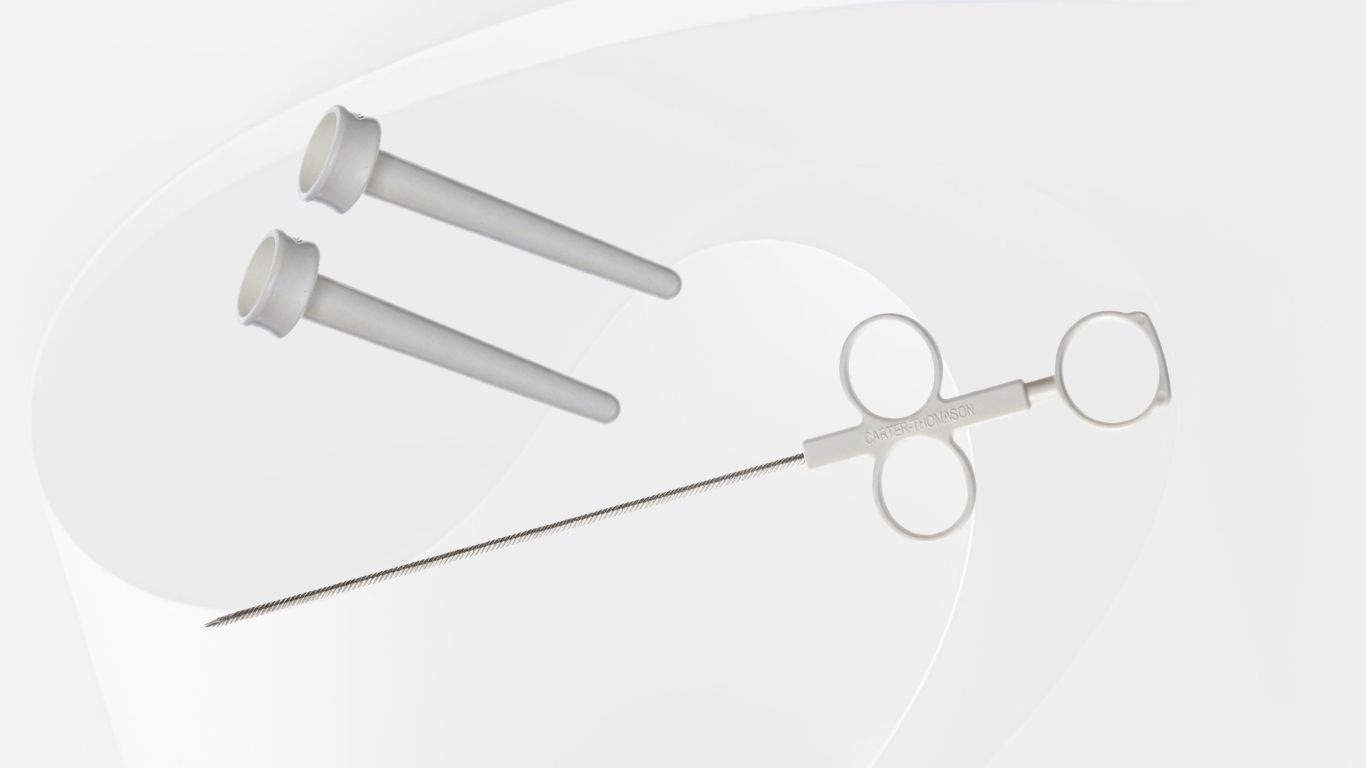
Needle shaft flexibility creates a second problem, and this one affects closure quality directly. Dense fascial tissue pushes hard against a passing needle. Some brands of Carter Thomason-style passers have a flexible shaft that bends under that pressure. When it bends, it renders the device inoperable. The surgeon then needs to replace the device and repeat the pass. Each repeat pass adds time and weakens the finished closure. Teams rarely separate these two costs in post-case review, so they often underestimate how much shaft flexibility hurts both efficiency and quality.
Suture release adds a third source of friction. Freeing the suture after each pass requires manual handling. This works under ideal conditions. It is not fast, however, and it does not perform the same way across different surgeons, suture types, and tissue. Together, these three problems produce a device that functions but costs more time, effort, and variation than a modern replacement should. For high-volume laparoscopic programs, that combined cost adds up quickly.
The Standards a Replacement Must Clear
Full-thickness fascial closure at trocar sites 10mm and larger is the established requirement for reducing port site hernia risk. Any replacement for the Carter-Thomason style suture passer must deliver reliable tissue engagement, consistent suture capture, and unobstructed release. It must do this across the range of patients and port sizes a modern laparoscopic team sees every day. The Carter-Thomason met this standard when better options did not yet exist. Whether it still meets it today is the question facilities need to answer at the procurement stage.
What the Securus System Delivers
Suture Ease designed the Securus System as a direct premium replacement for Carter-Thomason technology. It targets each of the three problems above with specific engineering solutions.
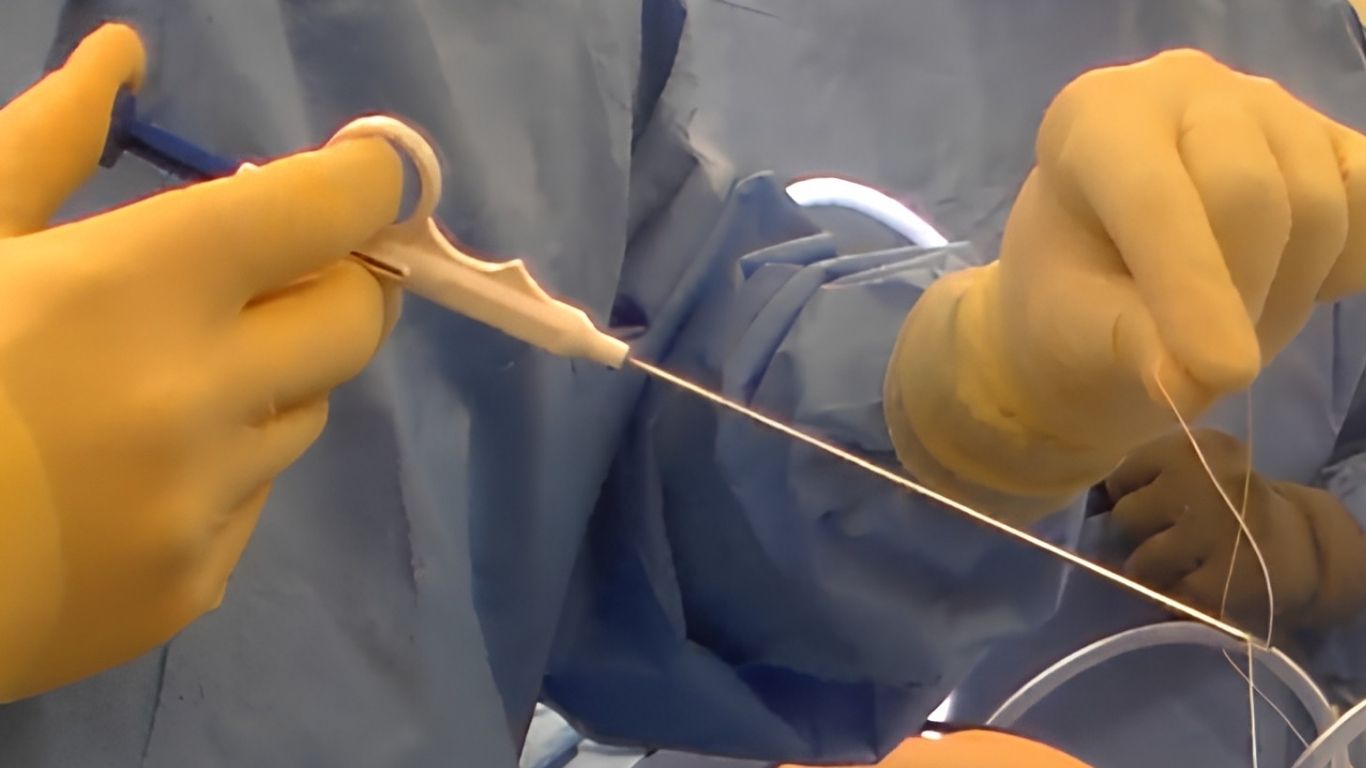
The larger aperture jaw makes suture loading much faster and more reliable. Surgeons load and capture on the first attempt as a rule rather than a best case. That single change removes the most common source of closure delays.
Suture Ease manufactures the needle shaft to four times the stiffness of economy passers. As a result, the shaft holds its path through dense fascial tissue rather than bending under pressure. Placement becomes accurate and repeatable. Repeat passes become rare.
An auto-eject mechanism handles suture release without manual handling. It performs the same way every time, regardless of surgeon, suture type, or tissue. These three improvements map directly onto the three problems the Carter-Thomason creates. Surgeons feel the difference immediately in clinical use.
The Securus System comes in two versions: a 12mm guide only (SE-SS12) and a combined 12mm plus 15mm guide set (SE-SS1215). Both cover the port sizes most common in standard laparoscopic cases.
The Financial and Operational Case
Procurement teams often push back on device upgrades even when the clinical case is clear. The Securus System addresses this directly. It performs better than premium Carter-Thomason alternatives and costs less. Better performance at lower cost makes the internal argument short.
Surgeons find the learning curve to be negligible. The Securus System uses a familiar cone-guide approach, so the method stays the same. Only the mechanics improve. Teams pick up a better instrument and close faster without rebuilding their habits. For high-volume programs, the total time and cost savings from that one change become significant within the first quarter of use.
If your facility still defaults to the Carter-Thomason suture passer, compare the Securus System against your current setup here. The upgrade case is straightforward.


Comments